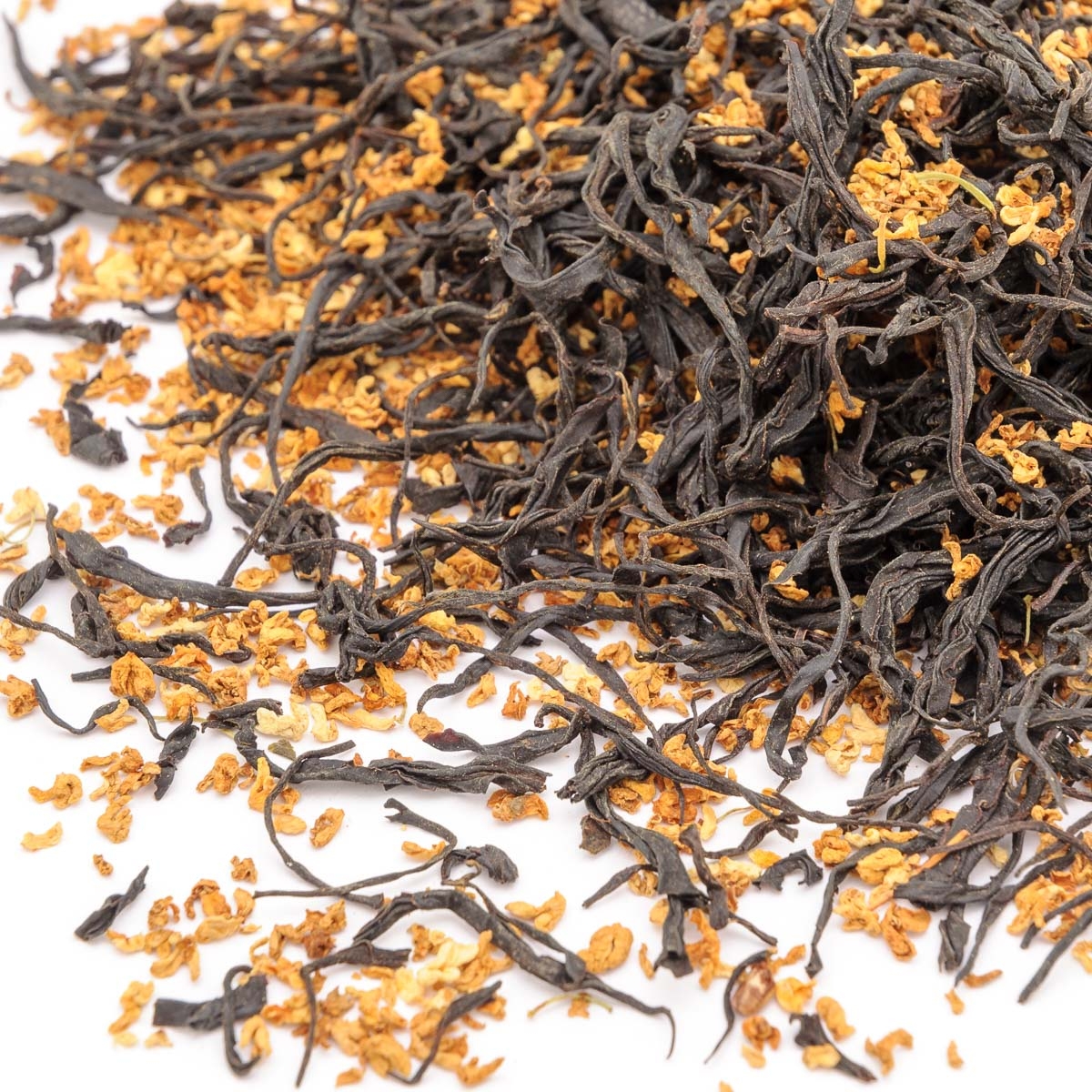
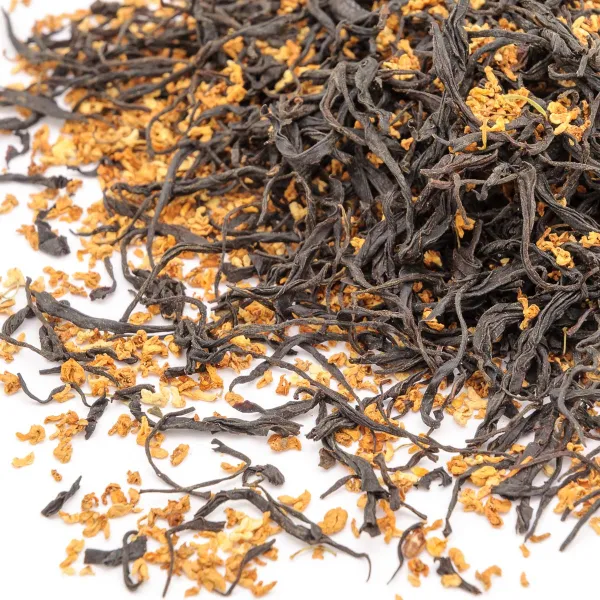
Osmanthus (Osmanthus fragrans), also known as muxi and yangui, is one of China’s ten traditional famous flowers and has been cultivated for more than 2,500 years. There are many varieties of osmanthus, mainly divided into four cultivar groups: Golden Osmanthus, Silver Osmanthus, Orange Osmanthus, and Four-Season Osmanthus. Among them, Golden Osmanthus blooms in autumn with golden flowers and a rich fragrance, making it an excellent choice for scenting flower tea.
Our osmanthus comes from osmanthus trees interplanted in Longjing tea gardens in Xinchang, Zhejiang Province. The tea garden has a mild and humid ecological environment, where tea plants and osmanthus trees grow side by side. Golden Osmanthus blooms in autumn, with a rich yet fresh, sweet fragrance. After harvesting, it is dried at low temperature to preserve its golden color and natural sweet aroma.
The tea base is Xinchang Tianmu red tea. Tianmu red tea is mellow, rich, and sweet, blending with the sweet fragrance of Golden Osmanthus. It combines the warm fullness of red tea with the fresh, sweet fragrance of osmanthus. It is smooth and mellow on the palate, with a long sweet aftertaste, a lingering fragrance between the lips and teeth, and a pleasant, lasting finish.
A cup of osmanthus red tea captures the terroir of Xinchang’s tea gardens and seals in the fragrance of autumn osmanthus.
In traditional culinary culture, osmanthus is often used to make osmanthus tea, osmanthus cake, osmanthus wine, and so on. Its fragrance is sweet and smooth, and it is widely loved.
How to prepare it?
| First rinse the leaves with hot water, then let them steep. | | |
| temperature | ratio | 1st | 2nd | 3rd | 4th | 5th | 6th | 7th | 8th |
| 95–100°C | 1g / 30ml | 20–25s | 15s | 20s | 25s | 35s | 50s | 70s | 95s |